
Scientific and technical translation
Areas of specialisation
I work in fields where a poorly chosen term, an incorrect unit of measurement or an ambiguity can affect clarity, safety or reputation. Here you will find my main areas of expertise and examples of the documents I translate.
Technical translation in science
In the scientific field, technical translation focuses on texts containing complex concepts and highly specialised terminology, such as research articles, laboratory protocols, clinical trial documentation or academic publications. It is essential to maintain precision and consistency, respect scientific notation and have a solid scientific background in order to avoid conceptual errors.
For example, scientific texts frequently include temperature units such as degrees Celsius, degrees Fahrenheit and kelvin. It is important to note that the unit kelvin is never preceded by the word degree and does not use the degree symbol (°). Likewise, the degree symbol should not be confused with the superscript ordinal indicator. Other common notation errors include adding full stops to SI units (for example, “min.” or “kg.”), inventing non-existent unit abbreviations such as “1 seg” or “2 kgs”, or using inconsistent precision in expressions such as 5 ± 0.1 mm. Strictly speaking, this should be written as follows:
5.0 mm ± 0.1 mm, with the unit repeated for both values.
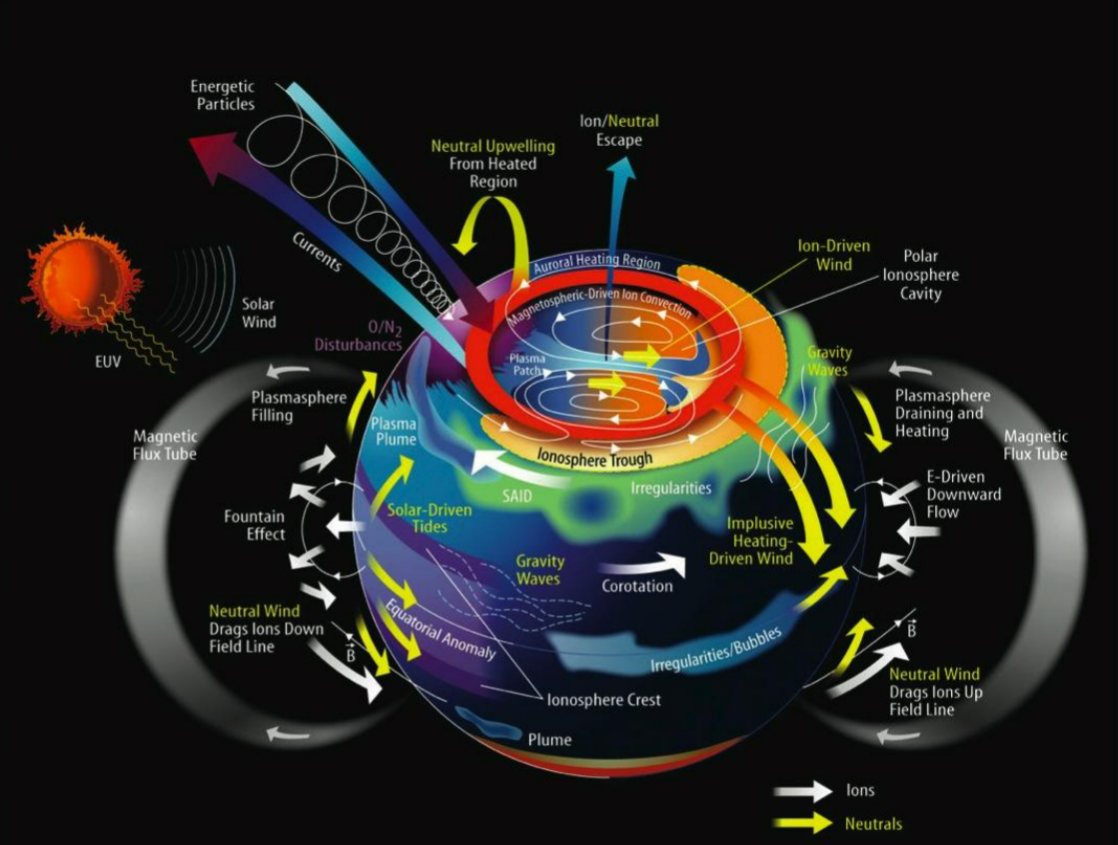
Another common mistake in scientific translation is automatically translating direction (English) or Richtung (German) as dirección in Spanish. In physics, however, these concepts are not always equivalent. Dirección is the line along which an object moves, whereas sentido specifies the orientation along that line. Every direction (dirección) has two possible sentidos: positive or negative, left or right, north or south, etc. Likewise, when describing circular or elliptical motion, the correct concept is the sentido of rotation (clockwise or anticlockwise), not the dirección of rotation.
Examples of scientific documents where accuracy and terminological consistency are essential to ensure the reliability and reproducibility of the information:
- Science articles for a general audience
- Research publications in international academic journals
- Scientific books and academic textbooks
- Experimental protocols
Technical translation in science
Are you concerned that these kinds of errors — and many other conceptual errors — might slip into your scientific translation?
Technical translation in technology
In the field of technology, documentation is translated in areas such as robotics, IT, energy, automotive, aviation, railways, machinery, civil engineering components and many other engineering fields, including safety products used in these industries, such as fall-arrest equipment or chemical- and fire-resistant protective suits.
The aim is to convey instructions, diagrams and system descriptions in such a way that the end user can operate, install, maintain, repair or understand a technology with no margin for error. In this process, it is crucial that the translation:
- conveys instructions clearly and without ambiguity,
- maintains accurate and consistent technical terminology throughout the document, including tables and figures.
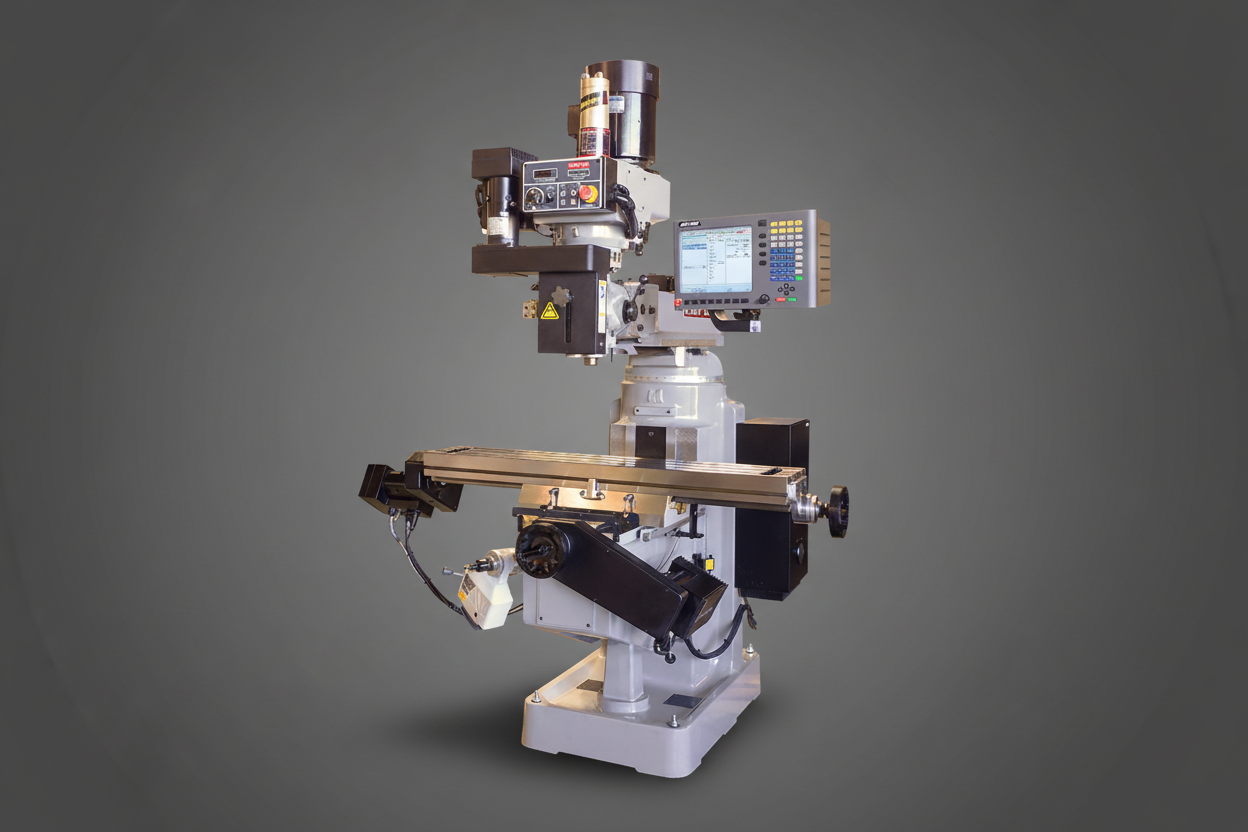
In addition, terms for manufacturer-specific components often appear before an established equivalent exists in the target language. The translation will therefore need to coin a term for them, which requires knowledge and understanding of the text. In these cases, the new translated term will be created by consulting the client about the function of the component. The geometric shape of the component can also provide a good starting point: geometric shape + of + function.
Examples of technology translations:
- Operation and maintenance manuals
- Technical specifications and schematic diagrams
- Programming manuals for industrial machinery
- User interfaces for industrial equipment
A common mistake in technical translation is to render the English term efficiency as the Spanish eficacia (or to mix up eficiencia and eficacia, two similar words in Spanish with slightly different meanings) when translating technical specifications. Although these concepts are often used interchangeably in everyday language, they have distinct meanings in engineering. An employee may be more or less eficaz depending on whether they achieve their objective, whereas the eficiencia of a machine refers to how effectively it converts energy or resources into useful output. In technical documentation, efficiency is commonly represented by the Greek letter η in specifications and data sheets.
Technical translation in technology
Looking for an engineering translator with meticulous attention to detail and a thorough understanding of the technical context?
Medical device translation
In the healthcare, biomedical and pharmaceutical fields, technical translation covers sensitive documents that can directly affect patient safety, clinical outcomes and the correct use of devices, on which patient’s quality of life —or even life itself— may depend.
This is why not only linguistic precision is required, but also knowledge of the foundations of these fields and correct handling of specialised medical terminology.
Examples:
- All types of surgical instruments
- Medical reports and diagnoses
- Clinical protocols and informed consent forms
- Patient information leaflets
- Laboratory devices
- Medical devices and hospital equipment
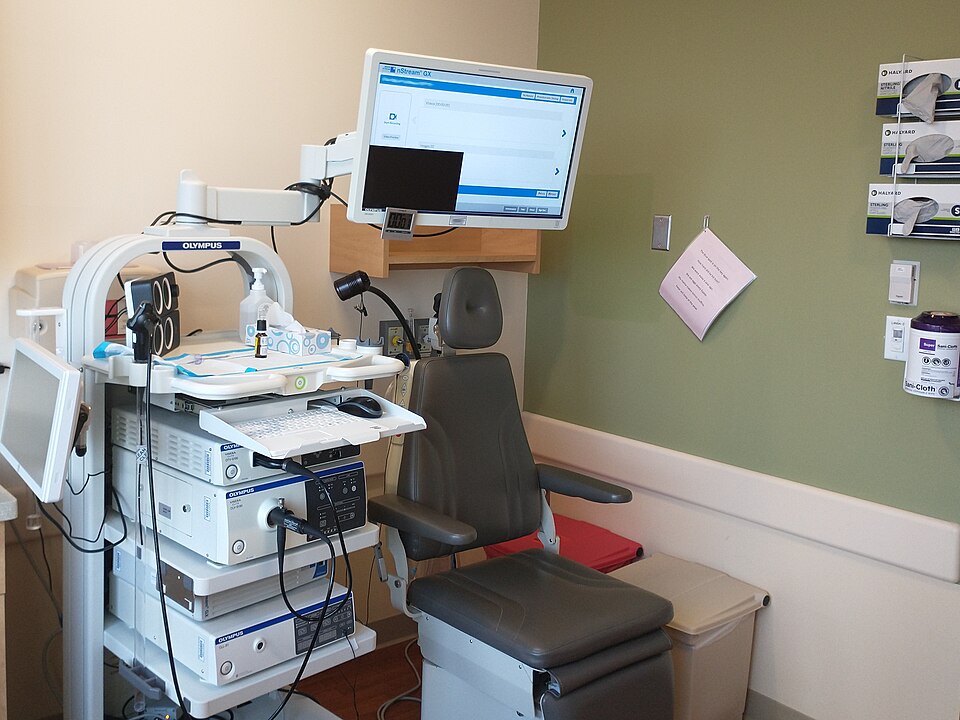
When translating, for example, the surgical manual for placing a spinal implant, the translator must accurately identify numerous anatomical terms with no possibility of error, along with names of surgical techniques that must be researched using medical terminology, names of all kinds of instruments down to their smallest components, and even scientific terminology related to the application of forces and their effects. This illustrates the importance of translating a surgeon’s manual correctly.
Another clear example of medical translation requiring specialised expertise is the translation of laboratory equipment for immunological tests. Everything related to genetics involves technical terms that are rarely translated correctly by a dictionary — these are known as false friends— unless it is a specialised medical dictionary. This is particularly true when translating from English into Spanish.
Medical device translation
Need a medical device translation where accuracy is essential to patient safety?
Technical translation in mountaineering
In the world of mountaineering, with disciplines such as climbing, alpinism, via ferrata, canyoning and trekking, terminology is not learned from books: it is acquired through practical experience. Instruction manuals, equipment, techniques and the way mountaineers communicate all have their own highly specialised language, often newly created, full of expressions that are familiar to experts, but incomprehensible to those unfamiliar with this sport. As a result, many of these terms and expressions can be challenging to translate for anyone who does not use them regularly. After all, someone who does not climb may read a text about clipping, redpointing or placing a nut and understand nothing, even if it is written in their native language.

That is why, in order to translate mountain sports texts fluently and naturally — equipment user manuals, technical data sheets with “exotic” part names, technical clothing and their performance fabrics, marketing material, articles for specialised websites or safety manuals — it is not enough to know both languages: you must have first-hand experience of the equipment itself. And, in addition to practising mountaineering, anyone undertaking technical translation in this field must have read extensively in their working languages in order to associate concepts and build their own mental glossary, and that process never stops, as terminology evolves quickly. There is no other way!
All of this becomes especially important in marketing texts that seek to evoke the emotions and experiences of the mountains, and that can only be conveyed by someone who knows what it means to reach a summit.
Working with technical translators who also use this equipment themselves ensures that every device (from a GriGri to a Shunt, including a foot loop, a maillon or a Reverso), every technique (building belay anchors, bivouacking, self-belayed abseiling, French cramponing technique and the essential self-arrest), the intricate terminology of the countless climbing knots (from the figure-eight knot and the girth hitch to the Machard hitch), and many other concepts are translated using the terms that climbers actually use. General dictionary definitions are of little use here, if they exist at all. Bilingual reference material is scarce and usually limited to lengthy, difficult-to-use documents. As a result, translators who do not actively practise mountain sports often have to spend a disproportionate amount of time researching terminology that experienced mountaineers already know instinctively.
Technical translation in mountaineering
Looking for a translator specialising in mountaineering? Like finding the right route in a whiteout... you've found one!
 English (UK)
  Español